The Role of Bulk Water Storage Solutions in India’s Water Security Strategy
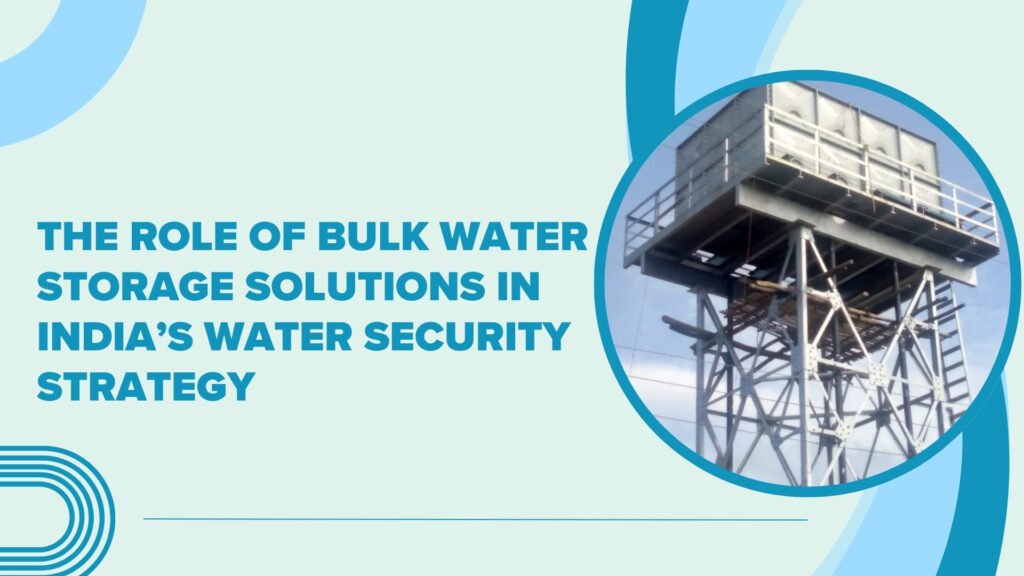
India stands at a critical crossroads when it comes to water security. With one of the world’s largest populations and rapidly expanding urban centers, the country faces increasing water scarcity, irregular rainfall patterns, and rising demand from residential, commercial, agricultural, and industrial sectors. In this context, bulk water storage solutions—including modern GRP/SMC panel tanks, modular reservoirs, prefabricated storage systems, and decentralized storage technologies—play a central and strategic role in ensuring sustainable national water supply.
This comprehensive article explores how bulk water storage supports India’s water security strategy, why the demand for advanced storage solutions is increasing, and how modern technologies are transforming India’s water infrastructure.
1. Understanding India’s Water Challenge
Water security is not simply about the availability of water—it also includes accessibility, quality, reliability, and sustainability. India faces a complex mix of environmental, structural, and socio-economic challenges:
1.1 Uneven Rainfall Distribution
India receives nearly 80% of its annual rainfall during a brief monsoon season, leaving long dry periods throughout the year. Poor distribution leads to:
- Excess water in some regions causing floods
- Acute scarcity in drought-prone areas
- Inability to store surplus water during the monsoon
- Dependence on depleting groundwater sources
1.2 Rapid Urban Growth
Urbanization is increasing at an unprecedented rate. Cities require enormous volumes of water each day for:
- Households
- Commercial complexes
- Hospitals and institutions
- Industries
- Construction and infrastructure development
Without adequate bulk storage, urban water supply systems cannot manage peak demand.
1.3 Groundwater Depletion
Groundwater contributes nearly 60% of India’s irrigation and 85% of rural drinking water. However:
- Over-extraction
- Lack of recharge
- Pollution of aquifers
have made groundwater unsustainable in many areas.
1.4 Inefficient Water Management
Traditional storage systems like masonry tanks, old steel reservoirs, and poorly maintained overhead tanks cause:
- Leakage
- Evaporation losses
- Contamination
- Structural damage
Bulk water storage using modern materials solves these issues by offering better reliability and longer life.
2. Why Bulk Water Storage Is Essential for India’s Water Security Strategy
Bulk water storage is a backbone of water management in both urban and rural India. It ensures availability, distribution efficiency, and timely access to stored water during emergencies, shortages, or peak demand.
2.1 Provides Water Security in Non-Monsoon Months
Given that India receives a majority of rainfall in a short window, storage systems ensure:
- Year-round availability
- Stable supply during dry spells
- Reduced dependency on borewells
- Balanced consumption patterns
2.2 Supports Government Water Initiatives
Initiatives like Jal Jeevan Mission, Swachh Bharat Mission, and Smart Cities require robust water storage for:
- Treatment plants
- Overhead distribution
- Rural piped supply
- Institutional water needs
Large-capacity, modular tanks play a crucial supporting role.
2.3 Ensures Industrial Continuity
Industries such as power plants, textiles, food processing, chemical manufacturing, pharmaceuticals, and mining rely heavily on steady water supply for:
- Processing
- Boiler feeding
- Cooling
- Cleaning
- Effluent treatment
Bulk storage avoids downtime and production disruption.
2.4 Strengthens Disaster Preparedness
In flood, drought, or cyclone-prone regions, storage becomes a lifeline:
- Temporary and mobile tanks support urgent relief
- Prefabricated systems can be installed quickly
- Stored water sustains communities until supply networks are restored
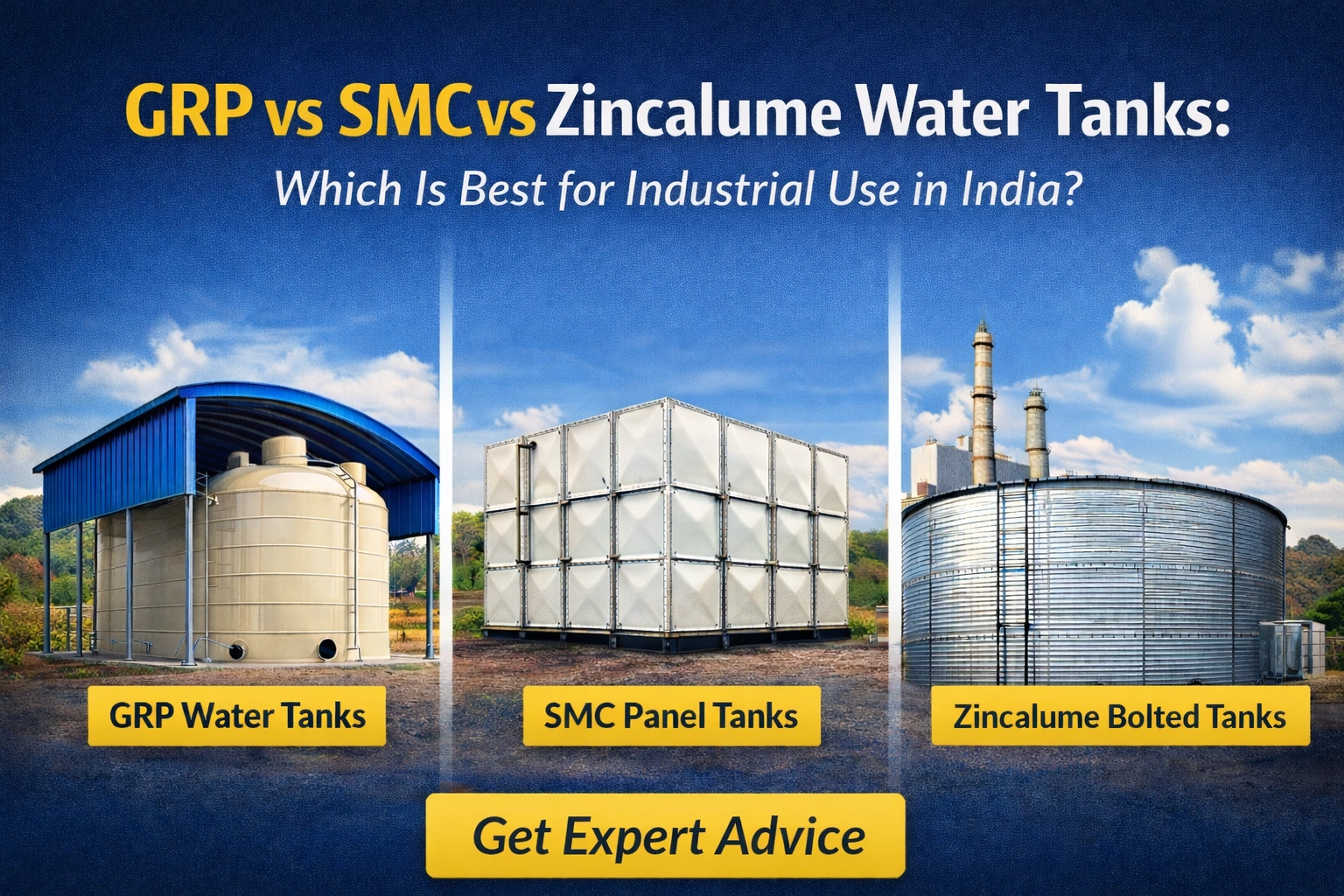
3. Types of Bulk Water Storage Solutions Used in India
India uses a wide range of water storage technologies, each suited for different applications.
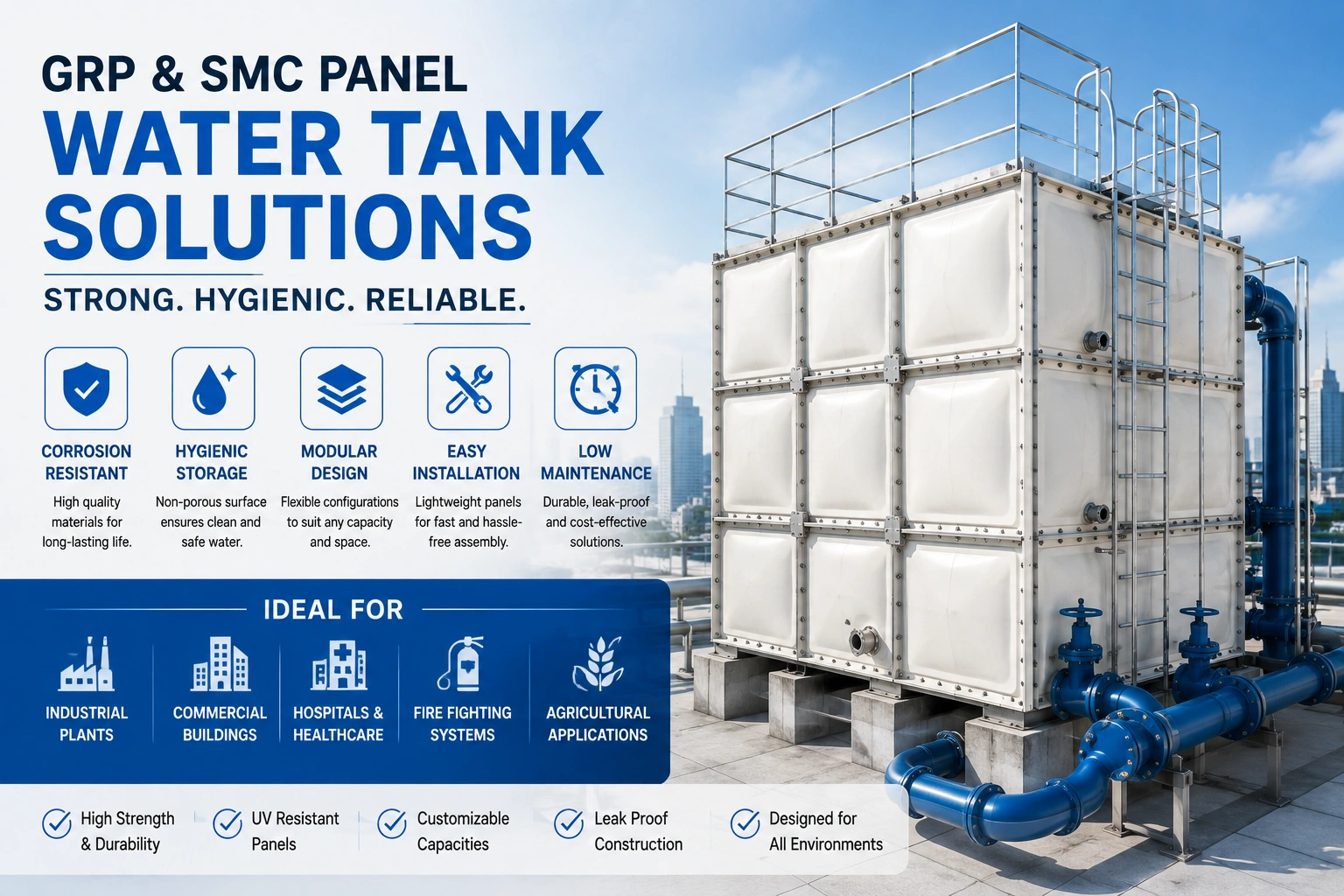
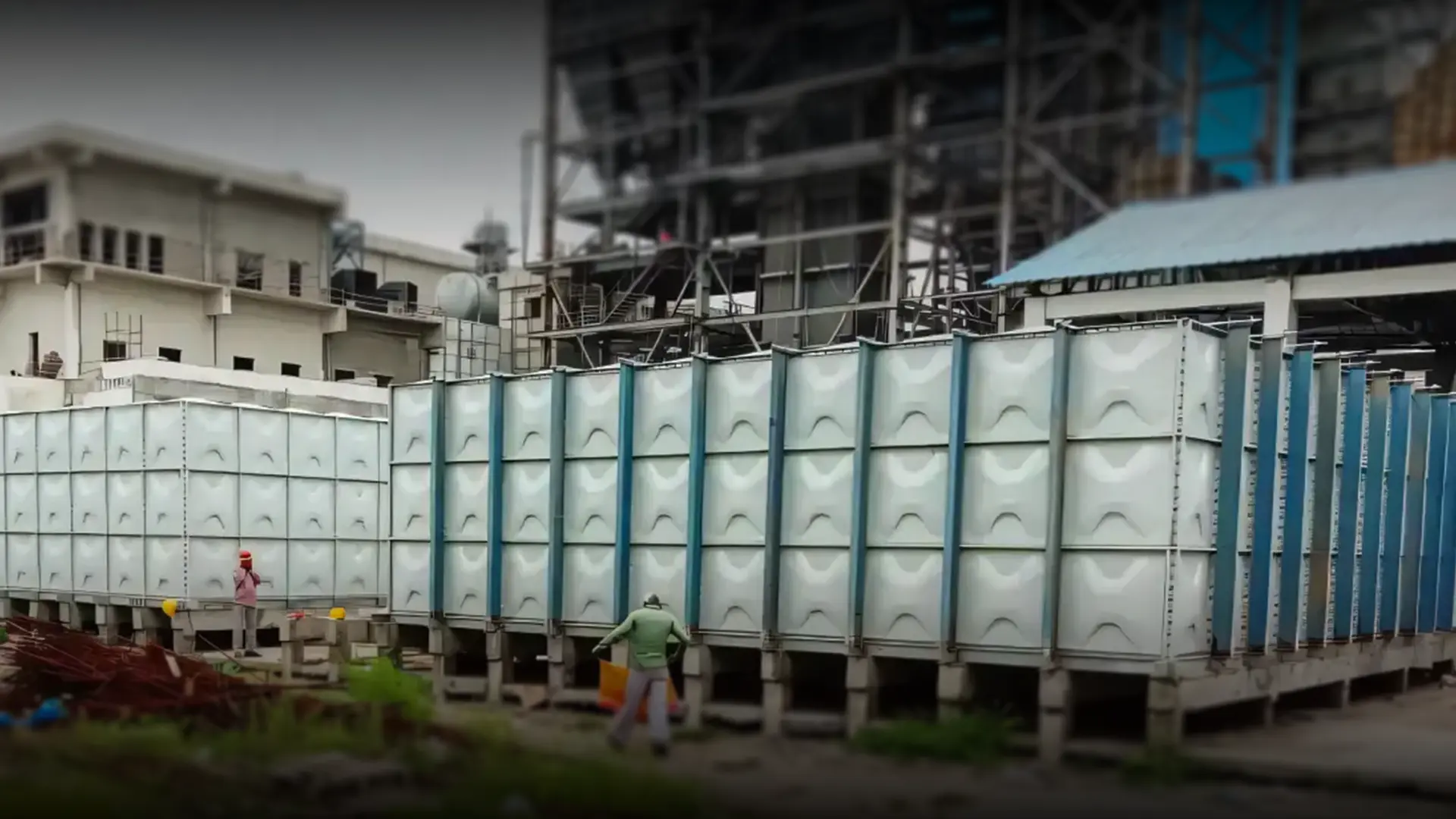
3.1 GRP (Glass Reinforced Plastic) Panel Tanks
GRP tanks are becoming one of India’s most popular storage solutions due to:
- Corrosion resistance
- Lightweight structure
- Hygienic storage
- Long service life
- Fast installation
- Modular capacity scaling
3.2 SMC (Sheet Molding Compound) Panel Tanks
SMC tanks offer similar benefits to GRP tanks but are stronger and can withstand harsh environments. They are ideal for:
- Industries
- High-rise buildings
- Rural water supply
- Municipal reservoirs
3.3 Prefabricated Steel Tanks
Used for industrial or agricultural storage where extremely large capacities are required, these tanks:
- Have high tensile strength
- Can be installed quickly
- Support large-scale water management projects
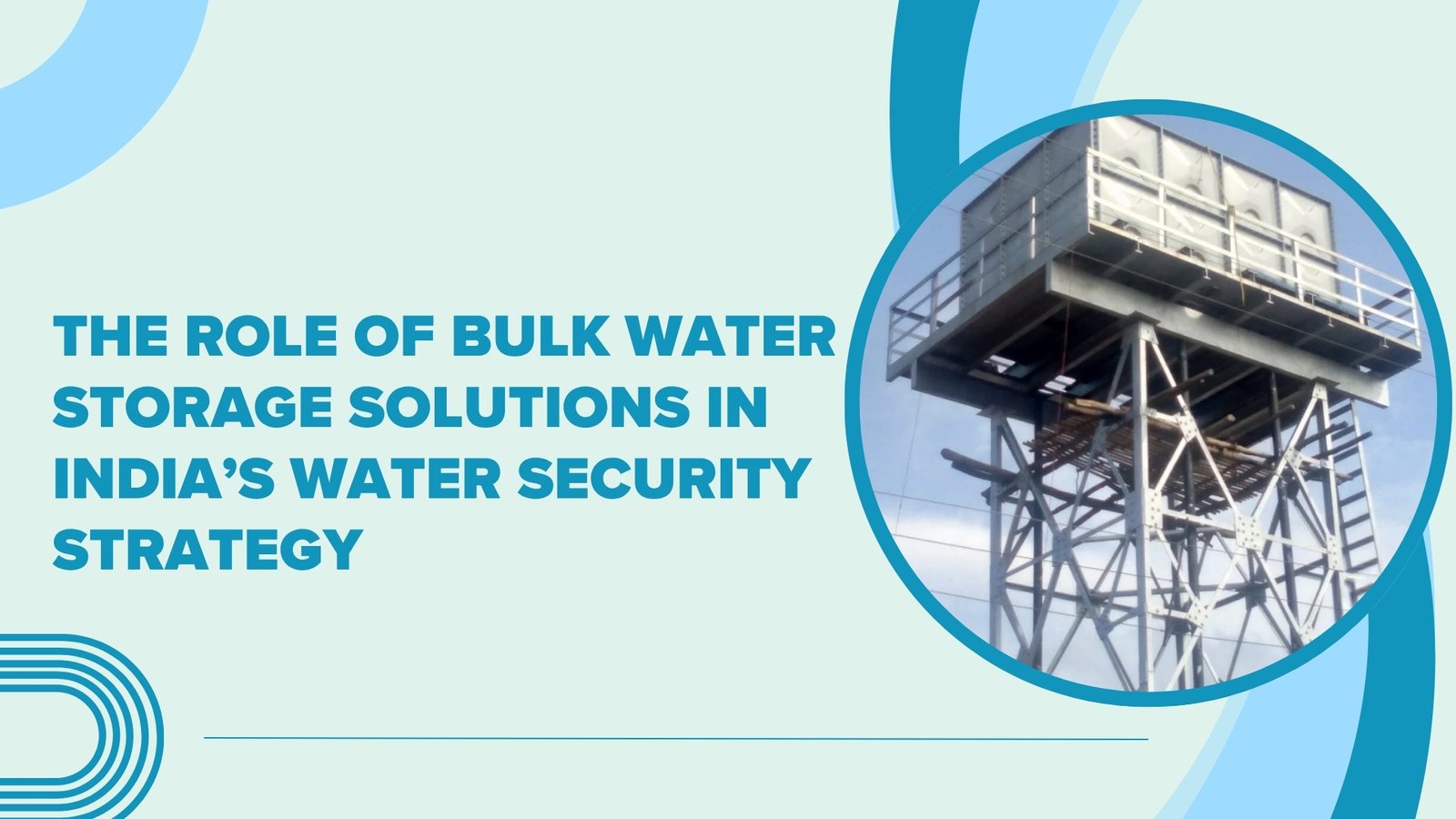
3.4 Overhead Water Tanks
Traditional and modern overhead tanks work as distribution points for:
- Urban households
- High-rise buildings
- Commercial complexes
3.5 Underground Water Tanks
Used for rainwater harvesting, firefighting systems, and decentralized storage.
4. How Bulk Water Storage Enhances Water Distribution Efficiency
Modern storage systems help maintain consistent water pressure and flow across distribution networks.
4.1 Balancing Peak and Off-Peak Demand
Cities experience heavy demand during mornings and evenings. Without storage:
- Pipelines would fail
- Pressure would drop
- Pumps would overwork
Tanks ensure smooth distribution.
4.2 Reducing Wastage and Leakage
Modern tanks have:
- Leak-proof joints
- Corrosion-resistant material
- High-strength modular design
This reduces losses significantly compared to old concrete tanks.
4.3 Enhancing Water Quality
GRP/SMC tanks reduce contamination due to:
- Non-toxic materials
- Sealed panels
- Easy cleaning and maintenance
Water remains fresher and safer for consumption.
5. Bulk Water Storage and Rainwater Harvesting in India
Water harvesting has become a critical part of India’s water security plan. Bulk storage tanks support harvesting by:
5.1 Capturing Seasonal Rainfall
Instead of letting rainwater flow into drains, storage tanks collect:
- Roof rainfall
- Surface runoff
- Treated fresh water
5.2 Reducing Urban Flooding
Storage tanks absorb excess rainwater during heavy showers, reducing:
- Waterlogging
- Sewer overflow
- Urban flooding
5.3 Supporting Groundwater Recharge
Even when used for harvesting, stored water can later be used for:
- Recharge pits
- Borewell replenishment
- Soakaways
6. Advantages of Modern GRP/SMC Bulk Storage Tanks Over Traditional Systems
Traditional tanks (RCC, steel, plastic) come with several limitations. Modern storage tanks offer strong advantages:
6.1 Corrosion Resistant
Unlike steel tanks, GRP/SMC tanks do not rust or weaken over time.
6.2 Lower Maintenance
They require minimal maintenance over decades.
6.3 Lightweight and Easy to Transport
Ideal for remote or hilly regions.
6.4 Quick Installation
Modular systems can be installed in:
- Remote villages
- Construction sites
- Industrial facilities
6.5 Cost-Effective Over Long Term
Lower maintenance + long life = reduced total ownership cost.
7. Role in India’s Smart Cities and Urban Infrastructure
Smart cities require smart water management. Storage tanks support:
7.1 IoT-Enabled Water Levels
Advanced tanks support level sensors for:
- Automated pumping
- Leak detection
- Supply optimization
7.2 Emergency Water Backup
Hospitals, malls, and institutions rely on storage during outages.
7.3 Infrastructure Scalability
As populations grow, modular tanks can be expanded easily.
8. Bulk Water Storage for Rural India
Rural India faces unique challenges such as:
- Low pipeline pressure
- Uneven supply
- Poor infrastructure
- Lack of continuous water supply
Bulk storage helps solve these through:
8.1 Decentralized Water Storage
Villages can maintain their own reservoirs.
8.2 Community-Level Distribution
Storage tanks support:
- Schools
- Panchayat buildings
- Health centers
8.3 Reduced Dependence on Groundwater
Stored water reduces borewell exploitation.
9. Challenges and Opportunities in India’s Bulk Water Storage Sector
9.1 Challenges
- Land availability for large tanks
- Initial investment costs
- Lack of skilled installers in remote areas
9.2 Opportunities
- Government focus on water-security projects
- Rapid urbanization
- Increasing industrial water demand
- Technological advancements in modular storage
10. Future of Water Storage in India
India’s future water strategy revolves around:
10.1 Decentralized Storage
Multiple mini-reservoirs prevent system-wide water failure.
10.2 Smart Monitoring
IoT and AI-driven water management.
10.3 Sustainable Materials
GRP and SMC will replace concrete and steel due to long-term advantages.
10.4 Growth in Prefabricated Systems
Faster development in urban and rural regions.
Conclusion
Bulk water storage solutions are at the heart of India’s water security strategy. As the country faces growing demand, climate challenges, and rapid development, modern storage technologies—especially GRP/SMC tanks—provide a reliable, scalable, and sustainable solution.
They empower:
- Cities to manage peak demand
- Rural villages to maintain consistent supply
- Industries to operate without disruption
- Government initiatives to succeed
- Communities to stay resilient during emergencies
In the years to come, bulk water storage will continue to be one of the most important tools in India’s journey toward sustainable water management.